Imogen-Naomi Herd
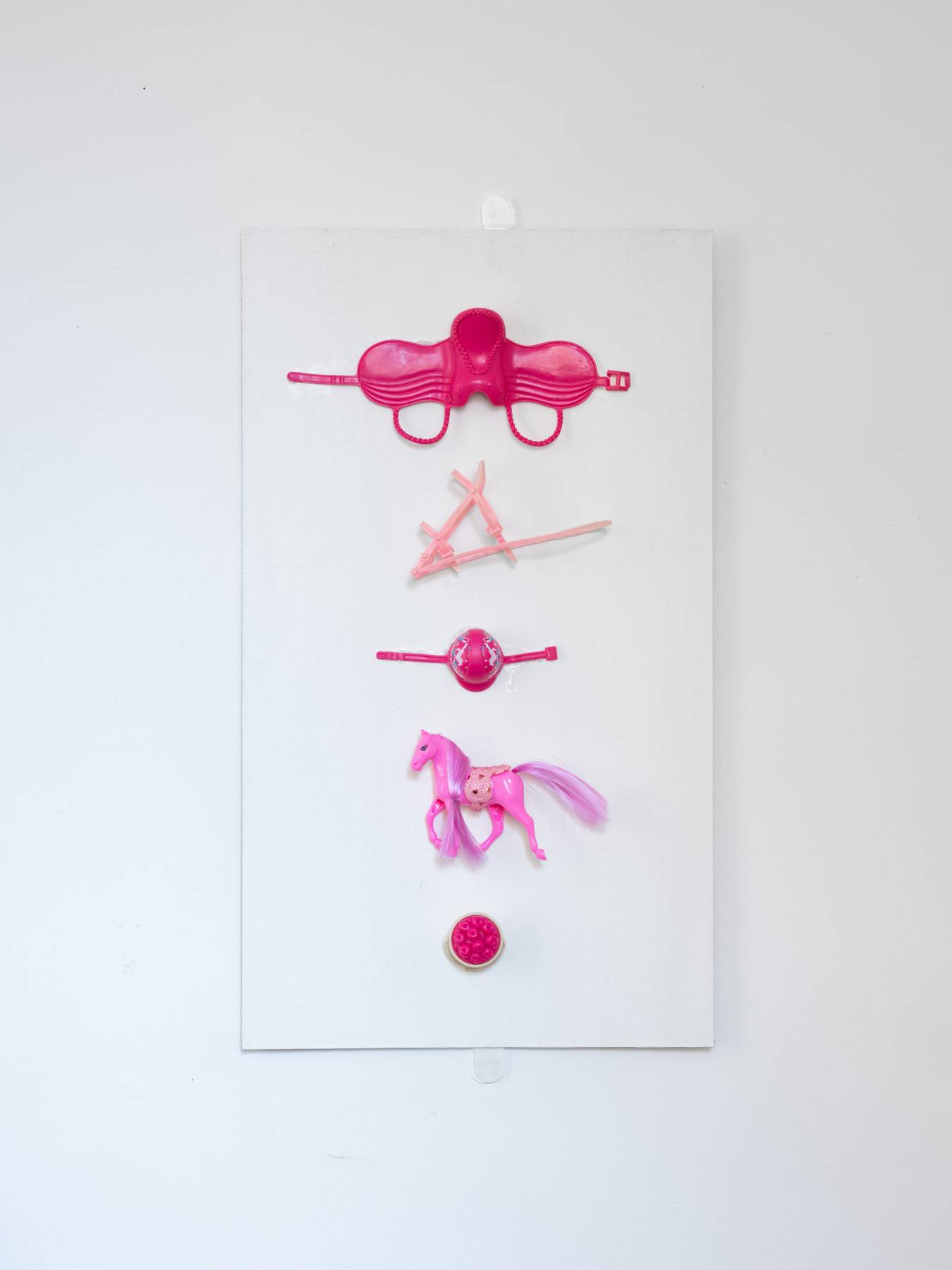
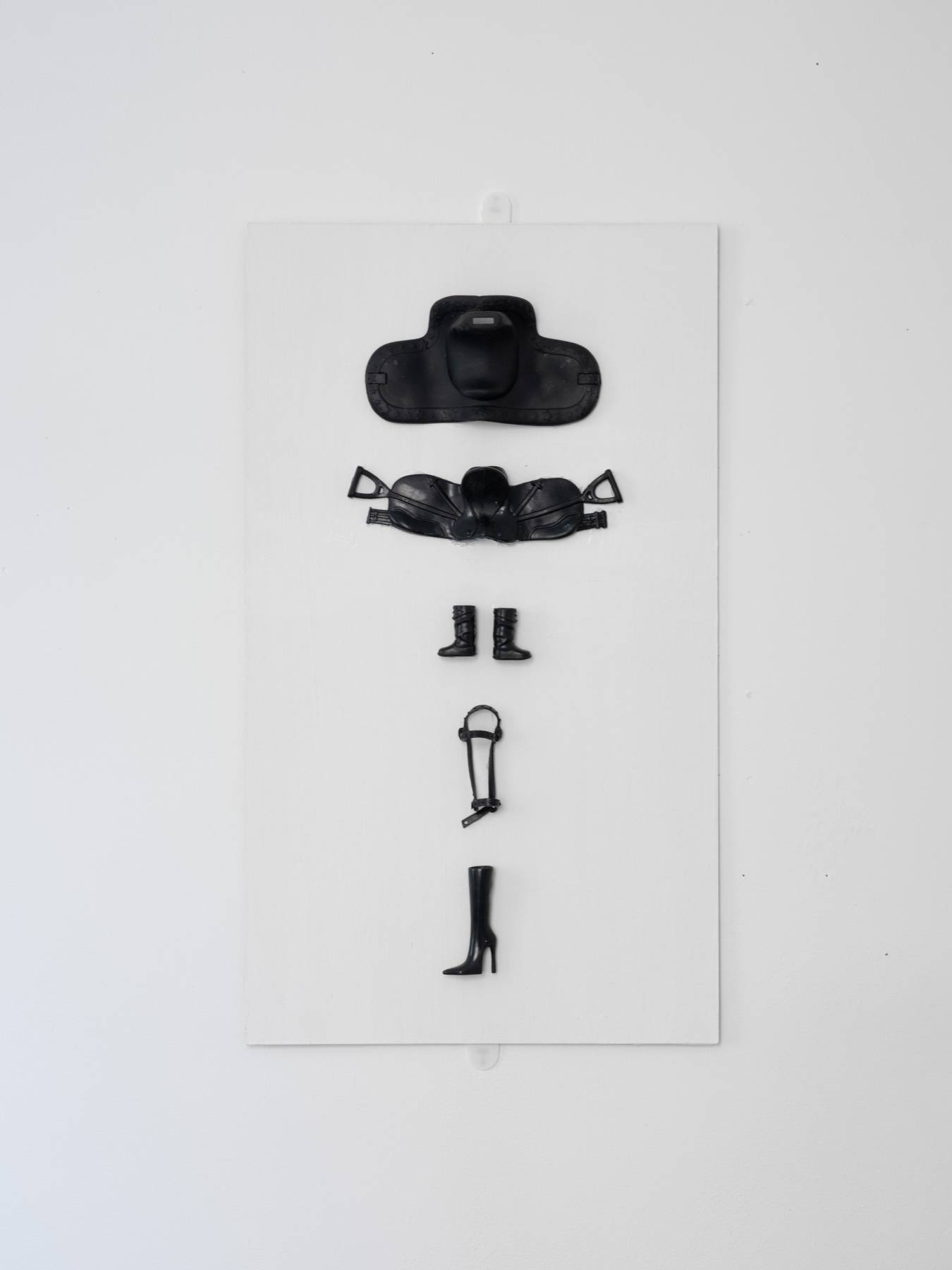
Imogen-Naomi Herd
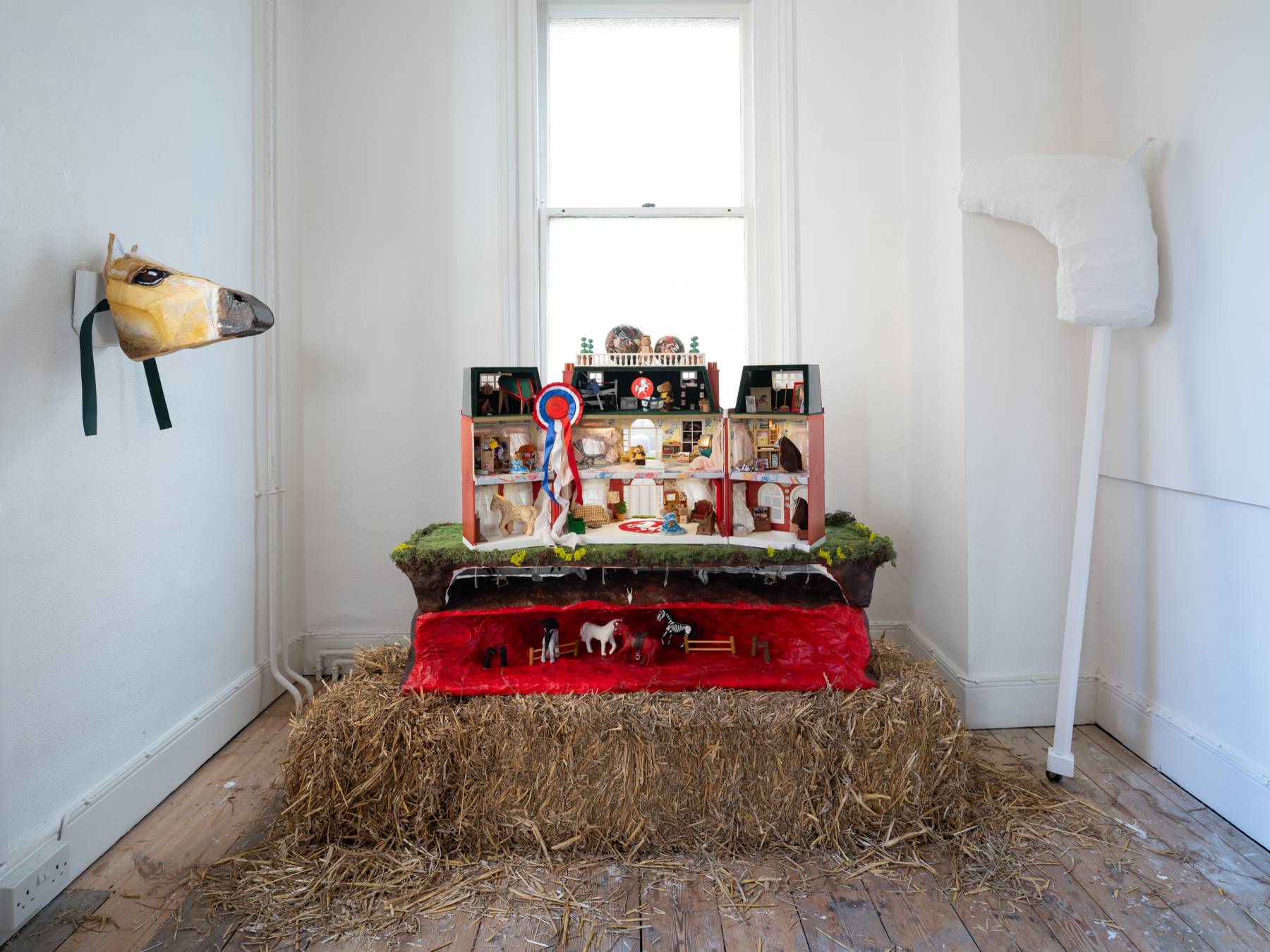
The White Rampant Horse Girl, 2026
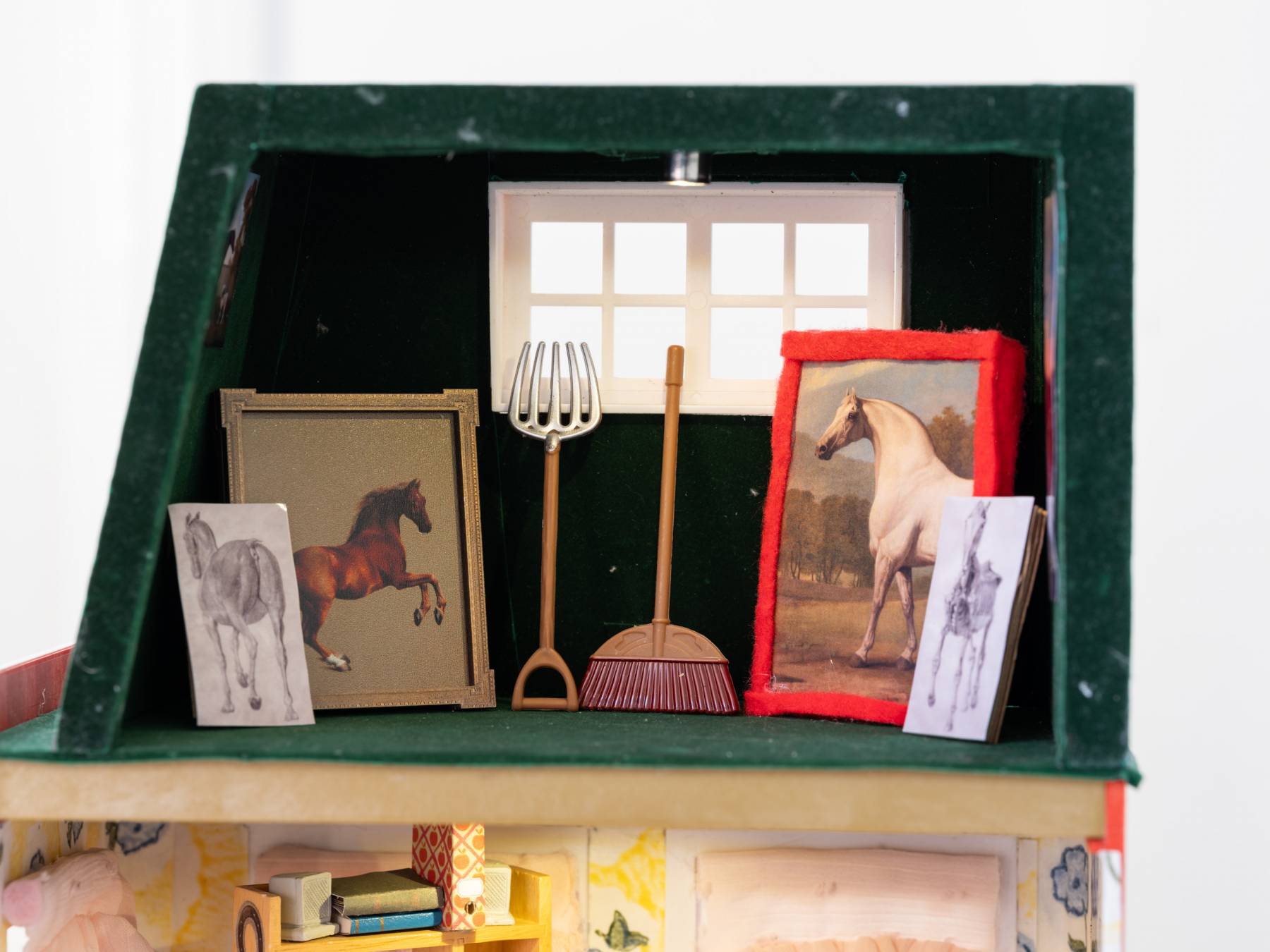
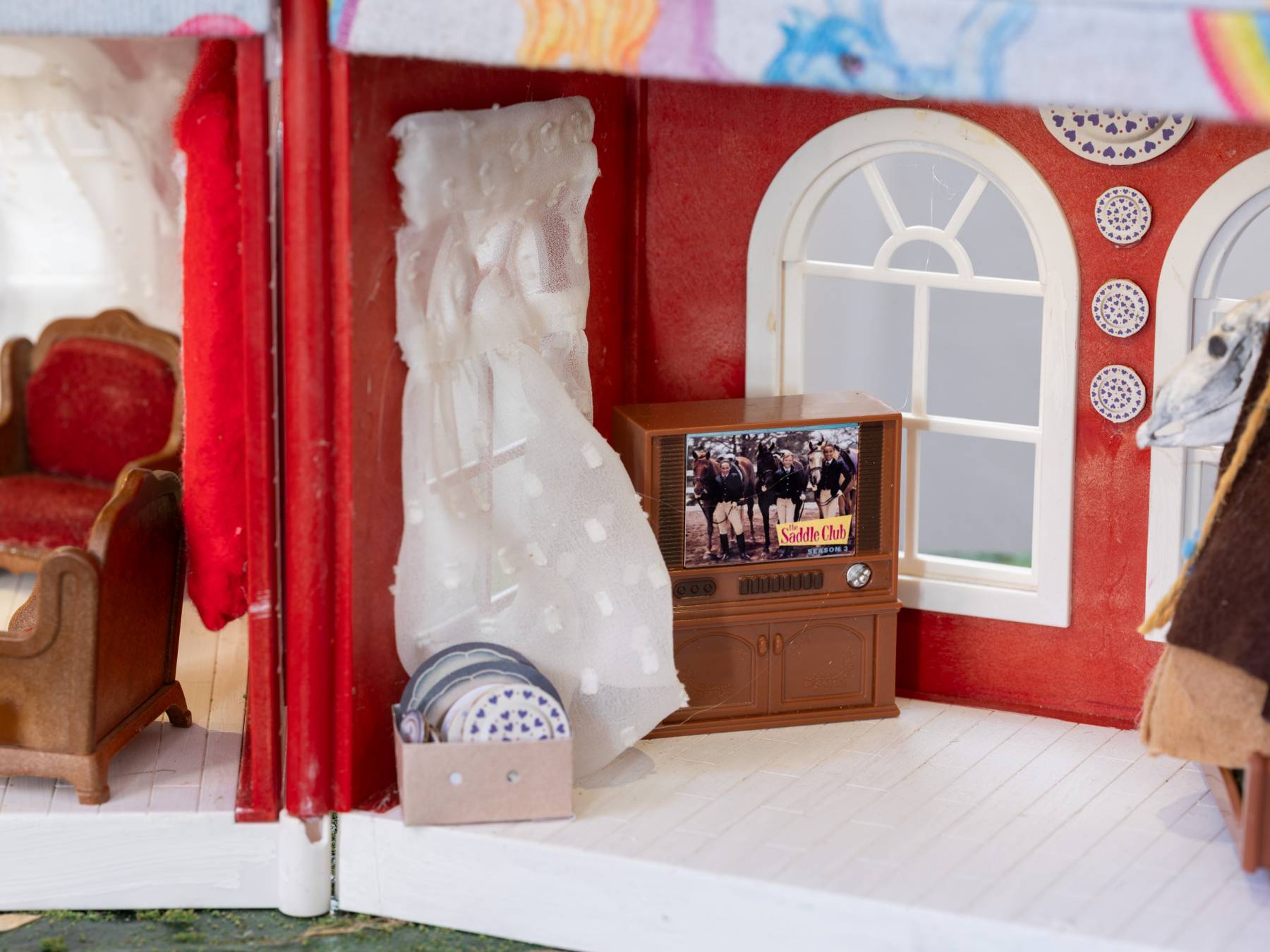
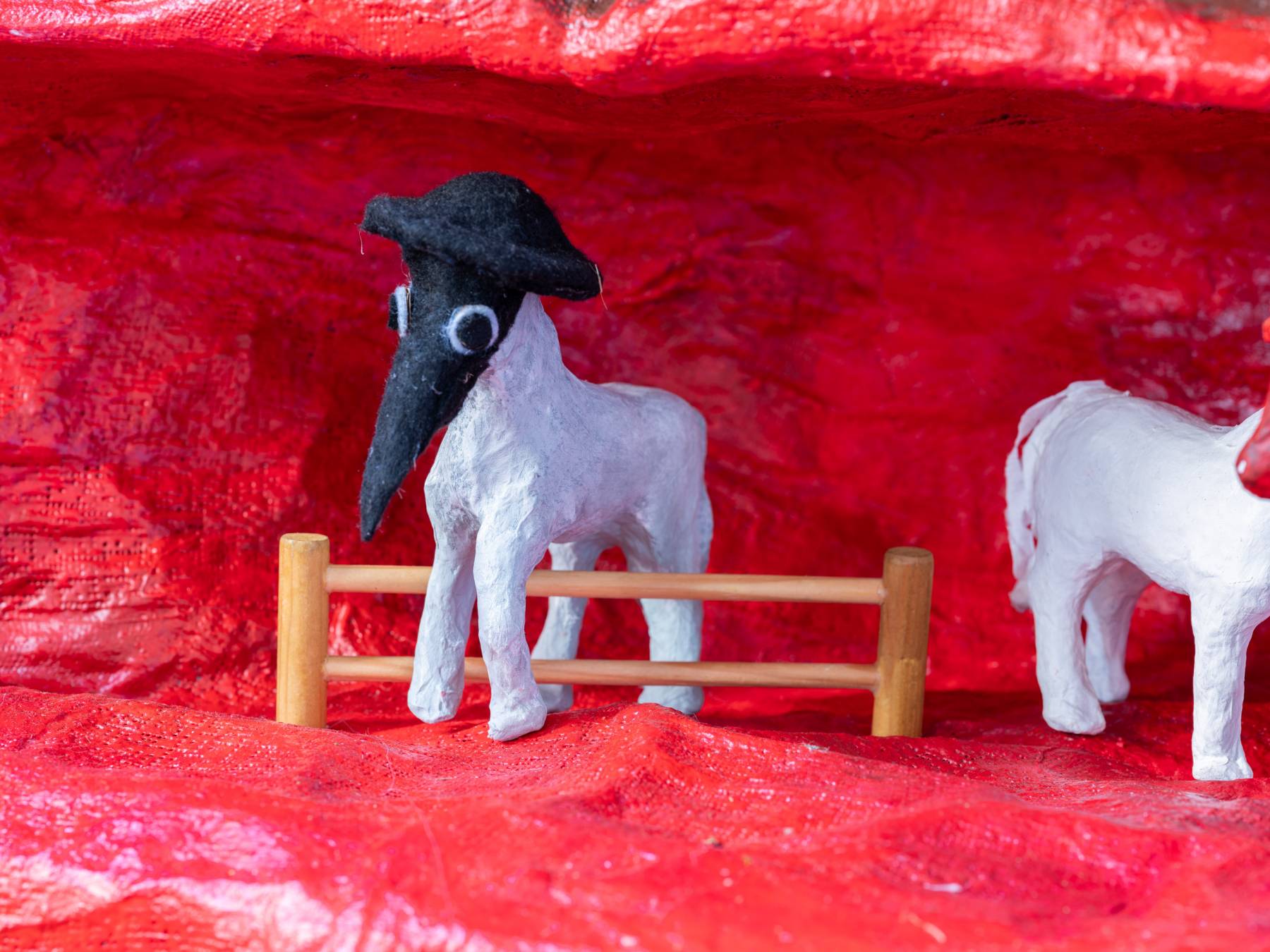
Sylvanian Families Regency Hotel, Forest Families Bärenwald Horse Family Set, Green velvet, chalk, hot glue, my vintage homemade bootleg VHS recording of Dreamworks Spirit: Stallion of the Cimarron (2002), 12 pritt sticks, acrylic paint, felt, lollypop sticks, plaster, cardboard, ribbon, My Little Pony fabric, my early 2000s collection of horse themed DS games, four George Stubbs portraits, wood, nails, fake horse skulls, hand blown stain glass, clay.
The White Rampant Horse Girl is a diorama anchored in the visual popular culture of a 2000s Kentish pre-teen girl’s bedroom: Sylvanian Families, Girl Guiding ephemera, Nintendo DS Horse games, and blue-tacked posters. These symbols and objects are translated into a miniature scale, which offers a terrain to consider and explore how folk, myth and collective identity is simultaneously inherited and re-invented. Borrowing the conceptual spatial logic of Aztec Maps, the piece traverses multiple layers of time: an auto-fictional excavation of childhood memory, a re-imagined horse themed folk history, and a middle-class aspirational living hell (and the depths below). The dollhouse serves as a vessel for competing performances of identity, presenting to the viewer the ‘horse girl’ as a contemporary folk archetype. The diorama subverts the familiar to destabilise the perception of the viewer: a wooden horse playing a PC simulation horse game; regional heraldry haunting a pre-teen’s bedroom.
The same nostalgic impulse that pulses through a Sylvanian Families village — its yearning for an imagined pastoral past — underwrites jingoism, class conformity and colonial ambition, from Baden-Powell’s scouting movement to St George’s slain dragon.
Imogen-Naomi Herd is a Margate-raised artist, writer, and cultural historian whose practice excavates the familiar to explore what lurks beneath the surface. Using material and oral history as lenses, her work informs and interrogates objects associated with childhood, domesticity, and popular culture, particularly Sylvanian Families figurines, dollhouses, uniforms, and ephemera as entry points into larger questions of nationhood, collective memory, folklore, and ritual.
Her practice subverts these objects of comfort and familiarity, drawing out the myths encoded within them: invented traditions, inherited hierarchies, and narratives that quietly shape identity. Existing in a space between the intimate and the anthropological (the anthropological can be intimate no?), her work uses collage, sculpture, and installation to interrogate how memory, place, and belonging are constructed, performed, and passed down.